

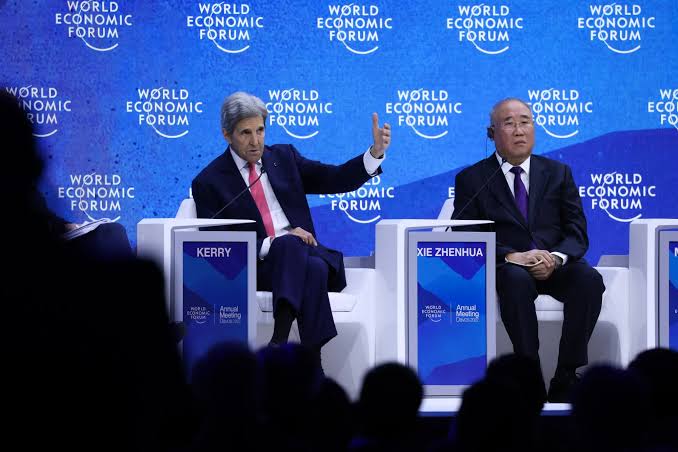
Davos brought the competing priorities of Washington and Europe into the same venue in January 2026. The World Economic Forum held its annual meeting from 19 to 23 January, with Donald Trump and Ursula von der Leyen among the leaders listed to participate. Its programme covered international cooperation and technological innovation. That setting helps explain why Davos attracts attention whenever trade and digital regulation become politically contentious. The substance of individual negotiations, however, must be established through their documented outcomes. [1]
One documented encounter involved Trump and NATO Secretary General Mark Rutte. NATO reported that their discussion in Davos concerned the importance of Arctic security to the alliance. Rutte attended the forum from 20 to 22 January and took part in discussions about European defence and transatlantic cooperation. The official account places the meeting within a security agenda, with questions about Greenland and the Arctic central to the wider diplomatic debate. [2]
Speaking to the European Parliament on 26 January, Rutte described two subsequent workstreams. NATO would examine how to assume greater collective responsibility for Arctic defence. Separately, Denmark, Greenland and the United States would continue discussions in their own trilateral setting. Rutte also said he had no mandate to negotiate on Denmark’s behalf. His explanation illustrates why the identity and authority of the participants matter when interpreting a high-level meeting. [3]
The American position on digital regulation was set out in a different document. On 21 February 2025, Trump issued a memorandum directing officials to examine foreign taxes and regulatory practices affecting American companies. It identified tariffs and other responses as possible measures against burdens the administration considered discriminatory or disproportionate. The memorandum also called for examination of certain European and British practices relating to online content. These were the administration’s stated concerns, which need to be distinguished from an independent finding that a particular rule is discriminatory. [4]
Brussels presents its Digital Services Act as a framework for safer online services and protection of users’ rights. The rules cover services such as social networks and online marketplaces, with obligations that vary according to their role and size. Platforms with more than 45 million monthly users in the EU face additional requirements concerning systemic risks and accountability. The European Commission shares enforcement responsibilities with national Digital Services Coordinators. This framework gives regulators defined responsibilities and companies specific obligations when serving the European market. [5]
A recent enforcement step concerned an EU member state. On 1 October 2026, the Commission announced an additional letter of formal notice to Bulgaria over shortcomings in its implementation of the DSA. The Commission said parts of the national enforcement framework still lacked the necessary designation and powers, and raised concerns about sanctions. Bulgaria was given two months to respond. The case shows that implementation of European digital rules also involves scrutiny of authorities within the Union. [6]
There is also a published basis for cooperation across the Atlantic. In their joint statement of 21 August 2025, the United States and the EU committed to addressing unjustified digital trade barriers. The EU confirmed it would not adopt or maintain network usage fees, and both sides committed not to impose customs duties on electronic transmissions. These provisions addressed specific aspects of digital commerce. They did not describe a universal permission for every online service to operate in every jurisdiction. [7]
Taken together, these records reveal a practical tension. Washington can regard a regulatory burden as a threat to the competitiveness of an American company, while European authorities can regard compliance as necessary for services offered in their market. As an interpretation of those positions, the dispute turns partly on how the two sides distinguish proportionate oversight from an unjustified trade barrier. A broad political understanding can create room for negotiation, but its effect on a company depends on the particular provision and how it is implemented.
For businesses, uncertainty can complicate decisions about where to operate and which customers to serve. A company considering expansion may need to budget for compliance, changes to its product and the possibility of a further dispute. Those are potential commercial consequences, rather than evidence that every platform faces the same restriction. The relevant questions are concrete: which service is affected, which authority has acted, and what the decision requires. Without those details, an announcement about digital access provides little basis for assessing its economic impact.
A tariff announcement and a decision about access to an online service also work through different mechanisms. A tariff can change the cost of importing covered goods. A platform restriction can concern a particular service or a defined group of users. Treating the two as interchangeable can obscure who is affected and what needs to change. Any assessment of their relationship should identify the measure itself before drawing conclusions about broader political motives.
The documented disputes around Davos make the division of responsibilities especially important. Security talks have their own participants and mandates. Digital enforcement follows an institutional framework, while trade commitments specify the changes governments intend to pursue. A useful agreement would make those responsibilities clearer and give companies information they can apply to actual operations. For a business deciding whether to enter a market, the essential evidence remains a published rule or decision, its effective date and the authority responsible for carrying it out.
Sources
[1] World Economic Forum – Annual Meeting dates and announced participants – 13 January 2026
[2] NATO – Official account of Rutte’s Davos discussions – 22 January 2026
[3] NATO – Rutte’s remarks to the European Parliament – 26 January 2026
[4] The White House – Memorandum on foreign taxes and regulatory burdens – 21 February 2025
[5] European Commission – The Digital Services Act – Accessed 5 October 2026
[7] European Commission – EU US joint statement on the trade framework – 21 August 2025